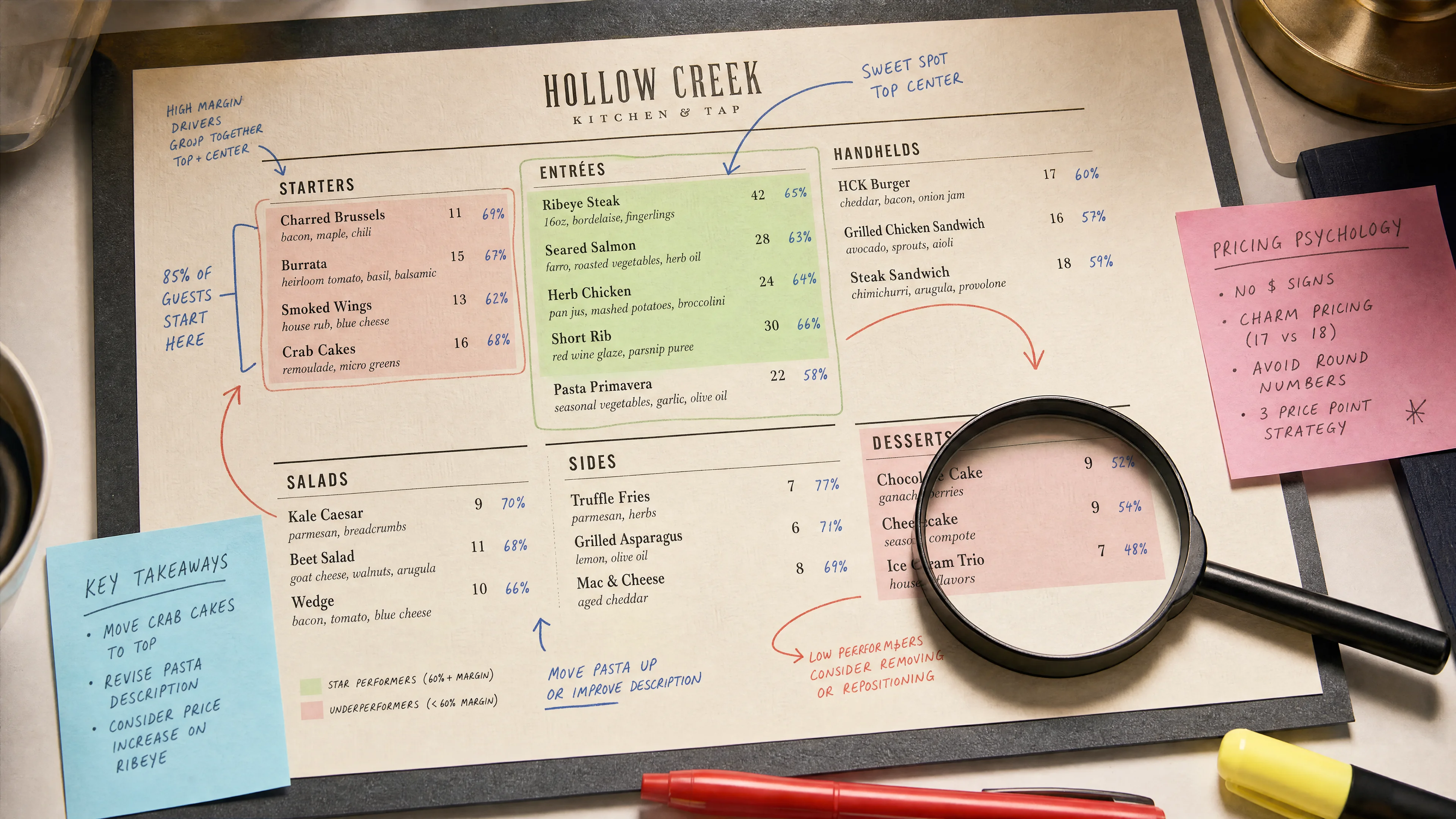
Most restaurant operators view the menu simply as a catalog of dishes and prices. In reality, your menu is the single most critical driver of your restaurant's unit economics, labor scheduling, and supply chain. It is a business model printed on a single sheet of paper.
The Math of Menu Engineering
Every item on a menu must be categorized by its performance on a two-dimensional grid: contribution margin (profitability) and popularity (volume). In menu engineering, we classify these as:
- Stars (High Margin, High Popularity): These should be protected, highlighted visually, and kept consistent. They are your primary profit drivers.
- Plowhorses (Low Margin, High Popularity): These drive traffic but dilute margins. They need portion adjustments, recipe re-engineering, or subtle price increases.
- Puzzles (High Margin, Low Popularity): These are highly profitable but sell poorly. They need better positioning, a name change, or staff recommendation.
- Dogs (Low Margin, Low Popularity): These should be removed immediately to reduce inventory and prep complexity.
Operational Constraint vs. Culinary Ambition
Every dish added to a menu adds a layer of operational complexity. A menu with 60 items requires massive prep time, high inventory carrying costs, and creates a bottleneck on the hot line during rush hour. By reducing the menu size by 30%, raw ingredient waste is reduced by 22% and kitchen throughput is increased by 15%, leading to faster table turns and lower labor costs.
Psychological Pricing and Layout
How you display prices matters. Removing currency symbols reduces the "pain of paying" and shifts focus to the description. Visual anchor points—like the upper right corner, where the eye naturally lands first—should be reserved for your highest-margin Stars. By structuring the visual hierarchy, you can steer up to 30% of diners toward your most profitable items.